Apr 14, 2026
March 4, 2026
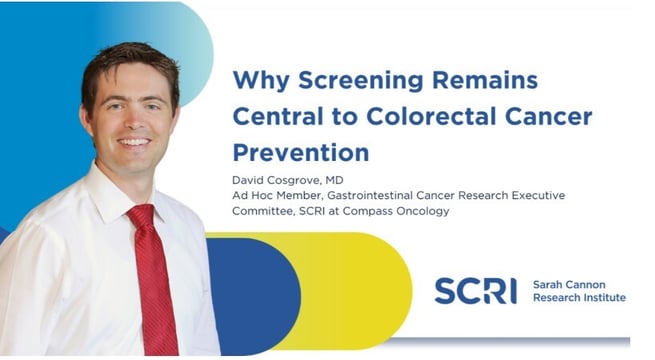
Colorectal cancer is one of the few cancers for which we have a long-standing, dedicated screening program. When screening is widely adopted, the impact is clear at the population level: both incidence and mortality improve. Early detection works.
And yet, too many eligible patients are still not being reached.
As an oncologist, I often meet patients later in their disease course, when cancer is already established and treatment needs to be more intensive. That sad reality reinforces how critical prevention and early detection are, particularly in colorectal cancer, where opportunities for earlier intervention are well established.
Why Screening Changes What’s Possible
Most colorectal cancers begin as polyps. This process typically unfolds over many years, progressing from a benign growth to an early malignancy and eventually to disease that can spread beyond the colon. When a polyp is identified and removed during colonoscopy, that intervention is curative for the vast majority of patients. Early-stage colorectal cancers can often be cured with surgery alone. As disease advances, treatment becomes more complex, outcomes become less certain, and the burden on patients increases significantly. From a clinical perspective, the best outcome is when patients never needs an oncologist at all.
Progress in Screening and Where Gaps Remain
Over the course of my career, colorectal cancer screening guidelines have continued to evolve. The recommended age to begin screening for average-risk individuals has shifted from 50 to 45, and additional screening options have expanded how patients can begin the screening process.
These changes matter. They lower barriers and help more people take the first step toward prevention. Still, most abnormal screening results ultimately require confirmation with colonoscopy, and challenges related to access, infrastructure, and patient hesitation persist.
Many patients perceive colonoscopy as difficult or disruptive. Concerns about preparation, time away from work, discomfort, or cost remain common. Others feel healthy and assume screening can wait, particularly if they do not have a family history of colorectal cancer. The reality is that most colorectal cancers are sporadic. Screening exists precisely because risk is not always predictable.
The Growing Concern of Early-Onset Colorectal Cancer
One of the most concerning trends we are seeing is the rise in colorectal cancer among younger patients, often well before current screening thresholds. These cases can behave differently and, in some instances, more aggressively, affecting people in the prime of their working and family lives. We do not yet have simple answers for why this is happening. Research is ongoing, and it is likely that multiple factors contribute over time rather than a single cause. What is clear is that we need better ways to identify risk earlier and broaden our approach to early detection. This is where continued research must focus next.
The Role of Community Oncology in Prevention and Education
At @Compass Oncology, and through our collaboration with @Sarah Cannon Research Institute, we are involved in late-phase clinical trials that explore new treatments for advanced disease. That work is essential, but it ultimately benefits a smaller number of patients.
Prevention and early detection have the potential to benefit far more.
Community oncology practices play a critical role in advocating for screening, educating patients, and supporting research focused on early detection. We work closely with primary care and gastroenterology colleagues, share real-world data, and encourage participation in studies aimed at identifying cancer earlier, even among individuals who may never require treatment themselves. Some of the most affirming moments in my practice come when patients or family members tell me that screening identified polyps before cancer ever developed. These are quiet successes, but they represent exactly what prevention can achieve when it works as intended.
A Message for Patients and Families
I strongly support current screening guidelines and encourage everyone at average risk to begin colorectal cancer screening at age 45. I also encourage patients to stay informed as new early-detection tools continue to emerge.
Colorectal cancer screening saves lives. It reduces the need for aggressive treatment and fundamentally changes what is possible for patients and families.
For Colorectal Cancer Awareness Month, that message is worth repeating. Early detection works, and we have the tools to make a meaningful difference if we use them.