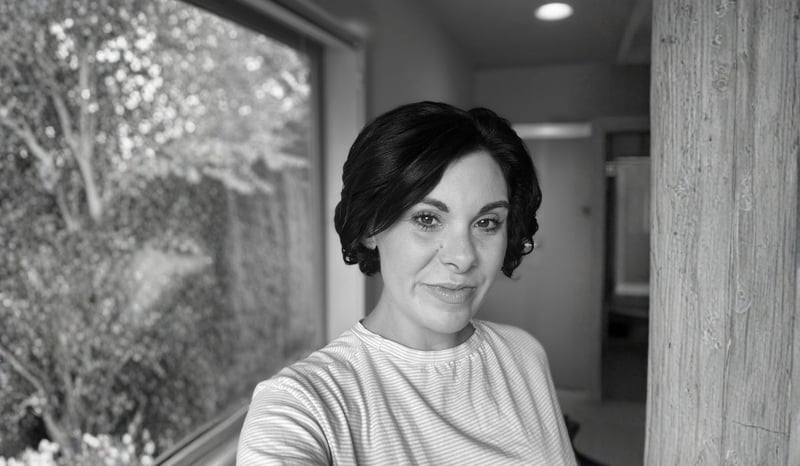
"I could tell I was more than a number to them.” — Nicole
At 38 years old, cancer wasn’t on Nicole Kunz’s radar. She was focused on building her family and a career in the healthcare insurance industry. While advocating for preventative care professionally, she decided to practice it personally, so she scheduled a routine women’s health exam. That’s when her doctor discovered the lump.
A battery of tests followed, leading to a life-changing diagnosis: an aggressive, multi-focal, hormone-receptor-positive breast cancer.
“It was like learning a new language overnight,” Nicole said. “I had no clue that breast cancer treatment is so personalized—there’s an analysis of how to care for the cancer, but also how to care for the patient.”
Trusting Compass with her life
Given her family history of breast cancer and the aggressive nature of her diagnosis, Nicole deliberately sought out the highest level of personalized care she could find. She received a referral to Compass Oncology, but as someone who values deep research, she also gathered second and third opinions.
“I heard a podcaster say, ‘Make sure you’re prepared to put your life in their hands,’” Nicole recalled. “At the end of the day, I chose Compass because of a gut instinct and a natural connection of trust. They genuinely cared about my comfort. I felt a sense of urgency – not that something bad would happen, but because I mattered. I could tell I was more than a number to them.”
Collaborating with her medical oncologist at Compass, Nicole decided upon an aggressive, multi-phase treatment plan. First came a double mastectomy, performed jointly by her surgical oncologist and a plastic surgeon; during this procedure, she also received a port for chemotherapy. Nicole described the recovery as "hellacious" but vital.
Next, she underwent eight rounds of chemotherapy every two weeks. Though the side effects accumulated, she found unexpected solace inside Compass’ treatment room.
“To be in the room with others came with a surprising level of camaraderie. Even if the person in the chair next to me was sleeping, I felt like we were doing it together,” Nicole said. “Plus, the nurses were incredible. I rarely had to ask for things because they were always checking on me, and they closely supported my husband, too.”
Chemo side effects were grueling, so Nicole kept Compass on speed dial.
“It was a challenge to get through chemo, but it didn’t matter who I was on the phone with at Compass, they knew what I was talking about. I didn’t feel rushed, and I was always a high priority to them,” Nicole said.
One phase ends, another begins: The reality of recovery
Nicole rang the bell at Compass to signify the end of chemo, but her cancer care continued.
“Everyone was excited when I rang the bell at the conclusion of chemo, but I was still very sick,” Nicole said. “I lost quite a bit of weight during chemotherapy, so I needed to regain strength and health before I could undergo breast reconstructive surgery. That included overcoming a jawbone infection and getting a related-root canal.”
Since Nicole’s breast cancer fed off estrogen and hormones, her doctor prescribed a chemically induced menopause. Overnight hot flashes, insomnia, migraines, and brain fog settled in. Concurrently, she began bone marrow infusion therapy, which triggered a severe, atypical reaction.
“I was trying to be a mom and return to work and return to what people say is ‘normal,’ yet I was so sick and in so much pain. I became frustrated and angry,” Nicole said. “One day, I called Compass and said, ‘You damn near tried to kill me!’ The nurse who happened to answer that day was heaven-sent. She was so gracious. She listened. She acknowledged what I was feeling and validated it … She then took it back to my team, and we temporarily paused my treatment to let my body recover a bit. It was handled with such kindness; I’ll never forget it.”
Forward thinking: Benefiting the future of cancer care
Nicole’s doctor suggested a clinical trial that she qualified for, and it entailed long-term clinical monitoring of patients. Nicole happily signed up.
“I think of all the women who walked before me that led to data points my doctor could present to me, and I want help and support future patients,” Nicole said. “They’ll monitor me for seven years; I have six years left.”
Because of her ongoing hormone therapy, Nicole will continue monthly appointments at Compass for the next decade. She says she’s deeply grateful for the team’s long-term presence in her life.
“Many times, I’ve heard Compass’ tagline about navigating care every step of the way, but it’s so real. They are genuinely there for it all,” Nicole said. “I still have my challenges, and my journey isn’t over, but I’m at a beautiful place in my recovery — and I’m not doing it alone.”
Written by Jessica Poe