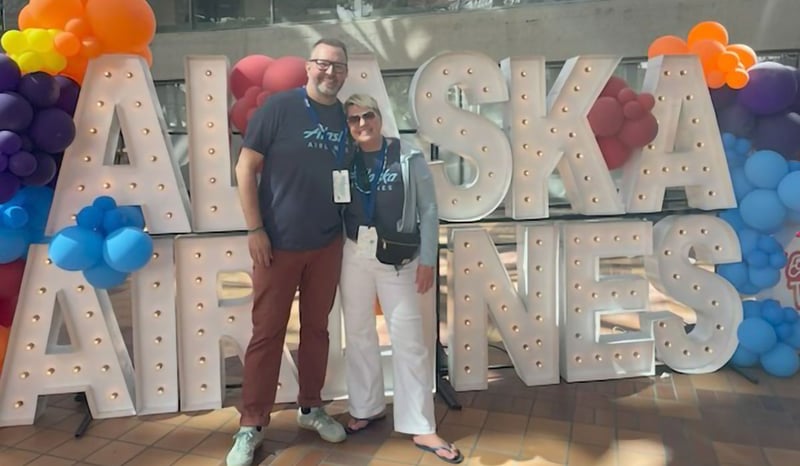
Kate Thomason simultaneously navigates cancer and grief, finding support at Compass Oncology.
Between menopause and celiac disease, Kate Thomason’s abnormally bloated stomach was easily dismissed, until it kept growing… and growing.
“It felt like an alien was inside me. I looked 3-months pregnant, and it kept getting worse. After two weeks, I found it difficult to eat or breathe. I knew something was wrong,” Kate said.
A gastrointestinal doctor saw Kate and requested imaging, which revealed masses on Kate’s ovaries.
“They told me it was bad and handed me a brochure for Compass Oncology. They told me that’s where I should go… They didn’t offer choices – it was that place. I’m so thankful it happened this way, so I’d be led to Compass,” Kate said.
As a self-described “head-down, get-it-done type of person,” Kate immediately focused on action. She said she didn’t cry but didn’t fully process either. She just wanted a game plan – and Compass delivered.
Every Diagnosis, Every Person is Unique: Compass Provides a Personalized Approach
Kate and her husband, Matt, first met with a gynecological oncologist and surgeon at Compass Oncology.
“I didn’t need a doctor to put their hand on my knee and give me sad eyes,” Kate said. “My doctor read what kind of person sat in front of her with accuracy. She simply said, ‘Here’s the deal: It’s bad, and we’re going to work to get you better,’ and then we talked about treatment options. I resonated with my doctor’s demeanor, kindness, and approach – she’s beyond an expert in her field.”
Kate’s treatment plan started with draining the 2 gallons of fluid that had accumulated on her stomach. Compass connected her with a vascular surgeon and ensured the procedure was completed as soon as possible. Then Kate geared up for chemotherapy, surgery, and then more chemotherapy.
“The mental game is so important … My husband and I would have massive dance parties in the kitchen the night before chemotherapy ... and I actually looked forward to going to chemo,” Kate said with a chuckle. “Who gets warm fuzzies about going to chemo? You wouldn’t think going to an oncologist could give cozy feelings, but Compass does. Those nurses are so kindhearted and funny. All of them! The only negative is having cancer, but everything else was positive.”
After completing the initial chemotherapy, the surgeon removed Kate’s uterus, ovaries, and the surrounding tumors. Then, with determination, Kate resumed chemotherapy.
The Compass Way: A Network of Kindness
Before her final round of chemo, Kate’s white blood cell count refused to rebound. Her doctor explained that Kate’s body was sending a message, and it was important to listen. The physician suggested a strategic maintenance program, consisting of a non-chemo infusions every three weeks.
“I was so upset that I couldn’t do that last round of chemo. I rang the bell but felt like I didn’t earn it. I’ve found the hardest part of cancer, for me, has been the transitions,” Kate said. “I didn’t know what to do. I worked so hard on my mental game while fighting cancer, and it felt like a big, scary shift from actively fighting cancer to my new normal of being a survivor … all while managing fear of the next blood test, scan or diagnosis.”
Kate told her doctor about her anxieties and what she dubbed a “post-cancer hangover.” The gynecological oncologist reassured her that those feelings were normal and then connected Kate with a Compass social worker. The social worker listened and then referred Kate to a compatible mental health professional who had openings and was in-network with Kate’s insurance.
“In a short amount of time, I was sitting in the psychiatrist’s office, and I’ve been seeing her ever since. That was a miracle, if you know how difficult it is to find excellent mental health care right now. The angels at Compass are so incredible at saying, ‘What’s your need? We got you!’ Then they connect you to resources within their network of kind people,” Kate said. “They’re compassionate and their efficient. It’s not just their people; it’s their entire system.”
Compassionate Care for the Whole Person
Amid maintenance program treatments, Kate suffered an unexpected and heartbreaking tragedy. Kate’s husband of more than 25 years, Matt, suffered a pulmonary embolism and suddenly passed away. In addition to navigating her complex cancer journey, Kate also navigates raw, deep emotional pain and grief.
Kate remembers her first Compass appointment after the terrible loss. She was in the middle of figuring out her medical insurance, since her husband had been the primary insurance holder, and everything felt impossibly complicated and intertwined. While in the waiting room at Compass, Kate’s oncologist opened the door and called her name.
“My doctor came and got me, brought me back into a room, and just hugged me. She knew Matt too, because he had come to all my appointments,” Kate said. “Because of the insurance, we couldn’t complete treatment that day, but I didn’t care that I had driven there just for a hug. It was totally worth it.”
When in the Mucky Middle: Kate’s Wise Words about Navigating Difficult Journeys
Reflecting on the past couple of years, Kate notes that her difficult journey has included many beautiful side effects.
“If I could go back and tell myself something when I was first diagnosed, I’d tell myself that it’s not that bad. It feels bad in the moment, but it’s not that bad. And whatever happens is going to happen. I think I’d also tell myself that there are positive outcomes: You get closer to the people around you, you see who your friends are and how they show up, and, yes, it gets hard. You’re going to be a different person once you’re on the other side. I’m not there yet. I’m not on the other side. I’m still in the middle, but I can see that it’s happening, and I’m thankful for those who continue helping me along the way – including the people at Compass,” Kate said.
Written by Jessica Poe